

A few years ago I sat with a SaaS founder whose team shipped new features every sprint, yet monthly recurring revenue (MRR) had been flat for six months. He had a strong product manager, a busy roadmap, and a growing backlog. What he did not have was a real grip on product strategy vs. product management.
The team kept asking what to build next while the market kept asking why they should care at all. Competitors with weaker engineering kept winning deals because they had picked a clearer market, a sharper problem, and a better way to charge for it. The company was not struggling with productivity. It was struggling with direction.
I see this pattern again and again when I work with SaaS and WordPress product founders. Studies show most products fail not because teams cannot build, but because they build the wrong thing, for the wrong people, or with the wrong business model. That is a misalignment between product vision and day-to-day execution.
“Strategy without tactics is the slowest route to victory. Tactics without strategy is the noise before defeat.” — Sun Tzu
In this article I want to give a practical way to think about product strategy vs. product management as two different revenue levers. Strategy sets where revenue will come from and why the market should pay. Management turns that intent into features, launches, and metrics that move numbers on a dashboard. By the end, you will know when to invest in strategy, when to double down on execution, and how to keep both working together instead of pulling in opposite directions.
What Product Strategy Actually Means for Your Bottom Line

When I talk about product strategy, I am not talking about a nice statement on a slide. I am talking about a long-term revenue hypothesis. A good strategy answers how you will win a market and keep earning money there while competitors react.
Real strategic product planning links your product vision directly to business targets. It connects things like annual recurring revenue, payback periods, and market share to clear product choices. It stops you from copying every feature competitors have and pushes you toward differentiated value that people will happily pay for.
“The essence of strategy is choosing what not to do.” — Michael Porter
Think of product strategy as the plan for where money flows in your favor. It decides:
- Which customers to serve.
- Which problems matter most to them.
- Which business model fits best.
Nespresso did not just build a coffee machine. It picked a pod subscription model that created steady, high-margin revenue. Amazon did not just sell goods online. It opened a marketplace that let others bring inventory while it focused on experience and scale.
A strong product strategy role also forces hard questions:
- Who exactly will pay, and what are they replacing to pay you instead?
- What do they value enough to justify premium pricing or long-term contracts?
- How can you scale that payment model without burning support, hosting, or marketing budgets?
On paper, good strategy documentation looks boring. It includes:
- Market size estimates and segmentation.
- Clear competitive positioning.
- Pricing and packaging logic.
- A simple product strategy framework that ties every big feature theme back to revenue.
If your “strategy” cannot show real paths to monetization and scale, it is not a strategy. It is a wish list.
What Product Management Actually Delivers in Revenue Terms

If product strategy is the long-term revenue bet, product management is the execution engine that turns that bet into cash. It takes the “why” and “where” from strategy and works out the “what” and “how” every single week.
The core product management responsibilities sit around deciding which problems to solve now, which users to focus on, and which features move key metrics. Good product management is less about writing pretty user stories and more about constant revenue testing. It links backlog items to activation, retention, expansion, and referrals.
“The job of product management is to discover a product that is valuable, usable, and feasible.” — Marty Cagan
A skilled product manager improves revenue in three main ways:
- Shortening time to first value so new customers activate and convert from trial to paid instead of dropping off.
- Driving adoption of sticky features that make the product harder to replace, which cuts churn and raises lifetime value.
- Building analytics and feedback loops that show which kinds of usage predict upgrades, upsells, or cross-sells.
Look at YouTube in the early days. Product management focused on smooth streaming so users could watch without waiting for long downloads. That one focus drove massive adoption, which later powered monetization. The iPod is another example. Many players existed, but the clean interface and simple sync flow pushed Apple far ahead.
In practice, strong product management is strategic product development in motion. It takes your revenue hypothesis and runs experiment after experiment through MVPs, feature flags, and releases. It says no to features that only increase vanity metrics and yes to those that support pricing power, retention, and real monetization.
The Critical Differences: Strategy Sets the Market, Management Wins It
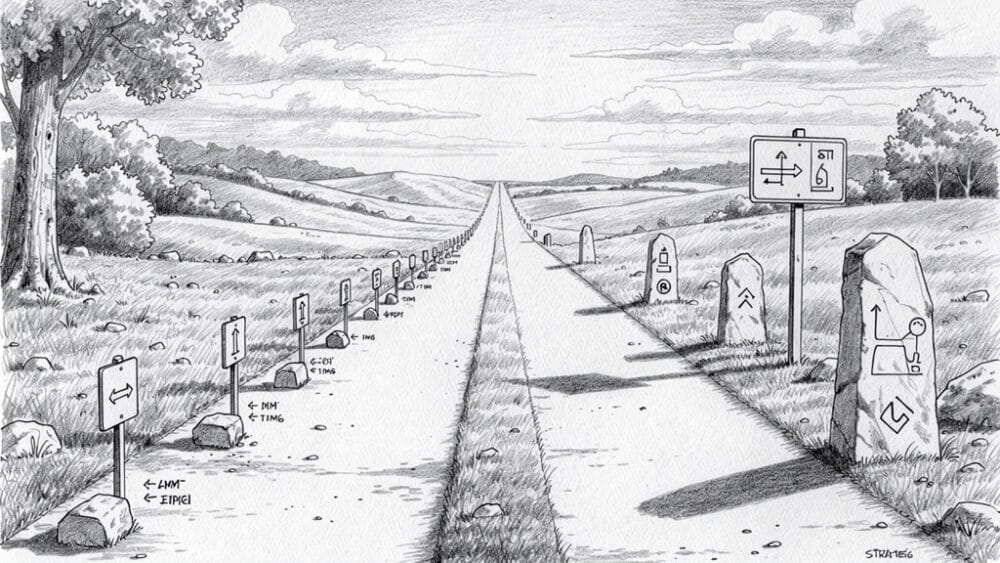
Founders often ask me whether they need better strategy or better execution. To answer that, it helps to see how different these two disciplines really are, even though they touch the same product.
Product strategy works at the altitude of markets and business models. It cares about which category you play in, which segment you own, and how you defend that position over years. It frames product vision vs. execution in terms of “where are we going and why does this matter in five years?”
Product management lives much closer to the fire. It cares about this sprint, this release, and this customer cohort. It still thinks strategically, but it must decide how to trade effort between onboarding, reliability, and new features this month. It focuses on execution speed while avoiding chaos.
Here is a simple way to compare them:
| Aspect | Product Strategy | Product Management |
|---|---|---|
| Main Focus | Market position and long-term revenue model | Product-market fit and execution quality |
| Time Horizon | Quarters and years | Weeks and months |
| Main Questions | Where do we play and how do we win for profit? | What do we build next and how do we ship it well? |
| Typical Outputs | Positioning, pricing, business model, product themes | Roadmaps, backlogs, MVPs, launch plans |
| Revenue Signals | Market share, pricing power, LTV and CAC ratios | Conversion, activation, retention, and expansion rates |
Both sides are needed, but the weight shifts with the stage. Pre-revenue products need enough strategy to pick a sensible hill before climbing it. Early growth products need solid product leadership roles to scale what works without losing focus. Mature products need a renewed strategy to find the next hill while product management keeps current customers happy.
I look at resource allocation through revenue risk:
- If you are missing product-market fit, your risk is that you are building for the wrong problem or buyer. That points to a strategy gap.
- If you clearly see demand but cannot ship reliably, your risk is execution. That points to a management gap.
Warning signs show up fast. Great decks and sharp positioning with no user traction mean you have strategy without management. Endless releases with no clear message, no pricing logic, and no segment focus mean you have management without strategy. Real growth happens when both feed each other and create a revenue flywheel instead of a tug-of-war.
Strategy Finds Revenue Opportunities; Management Captures Them
When I think about product manager vs. product strategist, I picture one scanning the map and the other running on the ground. Strategy scans markets to spot gaps others ignore, such as underserved customer segments or new ways to charge for value. It chooses whether you compete on depth, speed, brand, or price.
Once that choice is clear, product management translates it into actual product behavior and funnels. It defines which features must exist in the first version, which flows remove friction from signups, and which indicators show that users feel the difference promised by your positioning.
Take Uber as a simple illustration. The strategic insight was that riders and drivers could be connected through an app so that customers partially supplied the service itself. That move changed the cost structure and market coverage. Product teams then had to design:
- The rider and driver app experience.
- Driver onboarding and support.
- Rating systems and trust signals.
- Pricing logic that kept both sides engaged.
If you only have the idea, you have vapor. If you only have fast teams, you have a feature factory that others can copy. The power comes when strategic market insight hands off to clear product choices, and product management reports back live data that sharpens the next round of strategy.
The Revenue Impact of Misalignment
Misalignment between strategy and management is one of the fastest ways to burn runway. I see two patterns most often:
- Clear strategy, weak execution focus.
The company has a clear sense of market opportunity. They know which segment they want, which competitors they can beat, and how they want to charge. Yet their roadmap is driven by noisy feature requests and internal pet projects. Releases pile up, but revenue targets slip because the work does not support the chosen business model. - Busy execution, fuzzy strategy.
Teams execute well on ship dates and quality, but there is no strong product strategy framework behind the work. They build what a few customers ask for and what seems interesting. Competitors with sharper focus step into the same market and win deals even with simpler products because their story and pricing make more sense.
One SaaS team I helped had this problem. Their market was real and hungry, but their roadmap ignored the small set of features that would move prospects from pilot to annual contracts. Every quarter they shipped plenty of nice-to-have items while leaving the sales team without the tools that closed deals. Competitors were happy to take that business.
When I diagnose these cases, I map strategic goals to current roadmap items. If I cannot quickly see how features support acquisition, expansion, or retention for a specific segment, I know revenue is leaking. Every quarter spent in that state is not just lost growth. It is ground handed to rivals who are more aligned.
Which Role Your Business Actually Needs Right Now

Founders rarely have the luxury of hiring a full strategy team and a full product management team at once. So the real question is where an extra unit of effort gives the biggest revenue gain right now.
Broadly:
- Early-stage / pre-revenue: You need more strategy first. That does not mean months of slides. It means enough market research and problem interviews to form a sharp view of who will pay and why. Subsequently, you need intense product management focus to iterate toward product-market fit with fast cycles and small bets.
- Post–product-market fit / early growth: If you have some traction and a clear winning segment, but you struggle to scale, your issue is often execution. This is where stronger product management pays off. You might need better prioritization, tighter processes with engineering, and a stronger grip on metrics that show how users move from trial through long-term usage.
- Mature / plateauing products: For products that start to flatten or decline, the pendulum swings back to strategy. You need to find new revenue streams, such as adjacent features, upsell paths, or even new markets. At the same time, you still need solid management so existing customers stay happy while you experiment.
Most small teams cannot hire both a senior strategist and a senior manager. The founder usually carries both hats, which makes context switching hard. In that case I advise setting clear time blocks:
- Spend regular time looking up from the backlog to review markets, pricing, and positioning.
- Spend the rest on guiding day-to-day product development.
You know you need more strategic help when:
- Market shifts surprise you.
- Competitors out-position you.
- Your next revenue milestone feels vague or abstract.
You know you need better execution when:
- You miss deadlines or slip on quality.
- You spend more time firefighting than shipping planned work.
- Interest from prospects does not turn into steady revenue.
The right hire or partner depends on which of those pains hurts more.
How I Help SaaS Founders Align Strategy and Execution for Revenue Growth
This question of product strategy vs. product management alignment is precisely where my work as a fractional CPO sits. Many SaaS companies in the one to ten million dollar revenue range cannot justify a full-time Chief Product Officer, yet they face decisions that need C-level product thinking.
When I come in, I start with a strategic audit. I look at your current product vision, pricing, target segments, and funnel data. I read through roadmaps, backlogs, and recent releases. I speak with founders, team leads, and sometimes customers. The goal is simple: I want to see whether your stated business goals match the product decisions on the ground.
From there I build or refine a clear product strategy role for your company. That often includes sharpening your positioning, selecting a primary segment, and stress testing your revenue model. For SaaS and WordPress products, this may cover subscription tiers, freemium limits, add-ons, or licensing choices.
Next, I work with your existing team on execution. Together we create a validated roadmap that ties every major initiative to a revenue lever such as trial conversion, upsell, or churn reduction. We set up simple prioritization frameworks so your developers and designers can see why certain work comes first. This is where strategic product development stops being a buzzword and becomes a daily habit.
Because I have spent more than twenty years around SaaS and WordPress, including work with AI and LLM-based products, I bring playbooks that already factor in the quirks of these markets. That might mean handling plugin marketplaces, dealing with hosting performance, or building product-led growth loops.
The engagement is a partnership, not a one-time report. We have regular sessions to review metrics, adjust bets, and keep both strategy and product management responsibilities aligned. Often this kind of fractional guidance beats hiring a junior PM who can run ceremonies but cannot steer revenue.
The aim is always the same: help you make fewer expensive mistakes and reach your next revenue level faster.
The Essential Skills for Strategy Vs. Management Success
To decide where to invest in product leadership roles, it helps to separate the skills that drive strategy from those that drive management. Few people are world-class at both.
On the strategic side, helpful skills include:
- The ability to read markets and spot patterns in data.
- Mapping competitors and understanding where they are strong or weak.
- Seeing where your product can stand out instead of copying features.
- Comfort with business models, pricing, and financial metrics, since these shape which product bets even make sense.
On the management side, the skills lean toward team and customer focus. Strong product manager skills include:
- Deep user empathy, so you can turn raw feedback into clear problems.
- Discipline in prioritization, which often means saying no to good ideas to protect the few that truly move revenue.
- Calm coordination with engineering, design, marketing, and sales.
- The ability to communicate trade-offs and keep everyone aligned on why certain work matters most.
Most founders are naturally better at one side. Some love big ideas and market moves but get bored by sprint details. Others are excellent at building and shipping but do not enjoy market research. I suggest a simple self-check: ask where you spend time when nobody is pushing you. That is likely your strength.
From there you can decide what to learn, what to hire, and where outside help makes sense. Over time, a strong product strategy career path will deepen both sets of skills, but in different proportions. The danger sits in the middle:
- People who talk strategy but never turn it into hard choices.
- People who ship fast without any clear long-term direction.
Real-World Examples: When Strategy and Management Drive Revenue Together
To see how product strategy vs. product management work together, it helps to study companies that combine both well.
Facebook started with a sharp strategic move. It focused on real identity and university networks instead of broad anonymous forums. That focus created a strong sense of trust and social proof. Product management then had to deliver features like clean profiles, easy photo sharing, and engaging feeds. Without that execution, the strategy would have stayed a neat idea on paper.
Amazon built its brand on customer obsession and low prices. Those are strategic choices that shaped its business model and margins. Product teams then had to make buying incredibly simple, from one-click ordering to fast shipping and smart search. If the site had been slow or clumsy, the strategy would not have produced the same revenue.
Nespresso saw that people wanted cafe-level espresso at home without barista skills. The core product met that need by combining machines and pods that were easy to use. The real money came from the ongoing pod sales, which was a thoughtful strategic model. Product management still had to handle machine reliability, pod variety, and a pleasant buying experience.
These stories show a clear pattern:
- Strategy creates defensible positioning and attractive economics.
- Product management turns that into daily experiences that customers pay for and keep using.
The failure pattern is just as clear when only one side works. Great strategic insight with slow, buggy products wastes the advantage. Perfect execution on a weak or copycat strategy struggles to grow. The goal is always to match bold but realistic strategic bets with execution plans your team can carry.
Conclusion
So which one drives revenue, product strategy vs. product management? The honest answer is that they drive different parts of the same machine.
Strategy decides where the money should come from, which customers matter most, and how you plan to earn and keep profit. Management turns that picture into working software, happy users, and measurable results.
The real decision for any founder is where your gap is right now:
- If your story, market, and business model feel fuzzy, you likely need more strategy.
- If your opportunity looks clear but you keep missing on delivery and quality, you likely need stronger execution.
Misalignment between these two is one of the most expensive mistakes I see. Fixing it starts with a blunt review of goals, metrics, and roadmaps. If that feels hard to do from inside the building, this is precisely where a fractional CPO can help. Revenue growth does not require perfect strategy or flawless execution. It requires enough of both, pointed at the same target.
FAQs
Can One Person Do Both Product Strategy And Product Management Effectively?
Yes, one person can handle both, especially in early stages where most founders must cover many hats. The challenge is switching between long-range thinking and daily decisions without losing focus. Blocking regular time for strategic review, separate from execution work, helps. As complexity grows, separate roles usually make more sense.
How Do I Know If My Revenue Problem Is A Strategy Issue Or An Execution Issue?
You likely face a strategy issue when you keep shipping features yet struggle to gain market traction, and competitors win with similar products. You face an execution issue when demand seems clear but you cannot ship fast, resolve quality issues, or turn interest into dependable revenue. Mapping each major feature to a clear revenue metric often exposes which side is weak.
What’s the ROI of Investing in Product Strategy when I Need Revenue Now?
Poor strategy is costly because it sends your team to build features that do not move revenue, burning time and runway. A clear strategy focuses scarce resources on high-impact bets. In my experience, sharper strategy improves execution efficiency and decision quality within a couple of months, which is precisely when cash pressure feels strongest.
Should I Hire A Product Strategist Or A Product Manager First?
The right first hire depends on the stage:
- Before product-market fit, you need help validating markets and models, then enough management to iterate quickly.
- After fit, strong product management helps scale what works across segments, platforms, and channels.
For many teams, fractional strategic guidance beats a full-time junior PM as an early investment because it avoids expensive wrong turns while you still have limited resources.
How Does Ruhani Rabin’s Fractional CPO Service Work for SaaS Companies?
My work follows a strategic partner model with regular sessions focused on product direction, roadmaps, and key choices. Engagements can run on a monthly retainer or a scoped project, such as market entry or a roadmap reset. For SaaS products, I focus on pricing, feature priorities, and competitive position so your team can execute with clarity and confidence. Ready to elevate your product strategy? Schedule a free consultation today to discuss how fractional CPO support can accelerate your growth and sharpen your competitive edge.